Growing Tips: Bleeding Heart
OVERVIEW
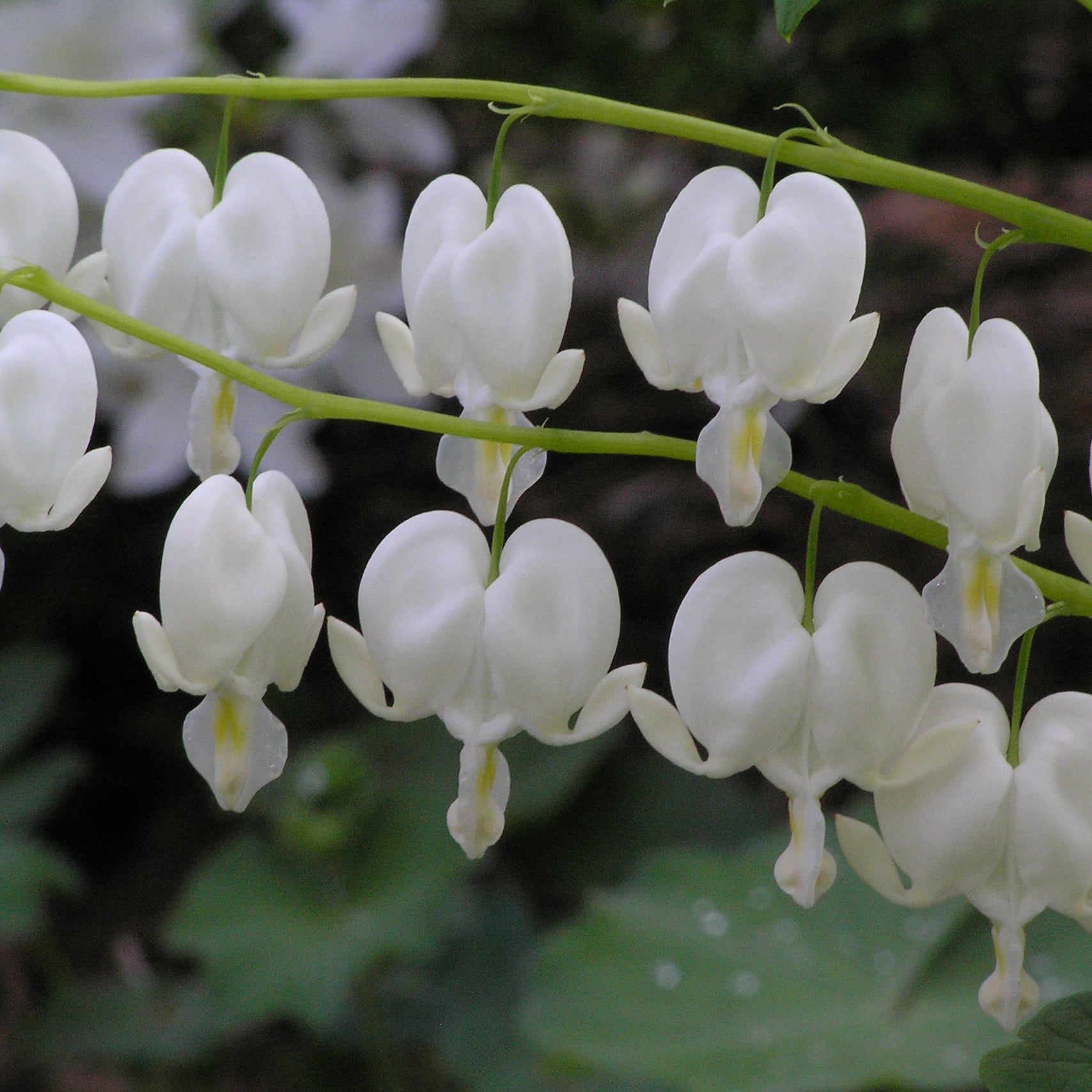
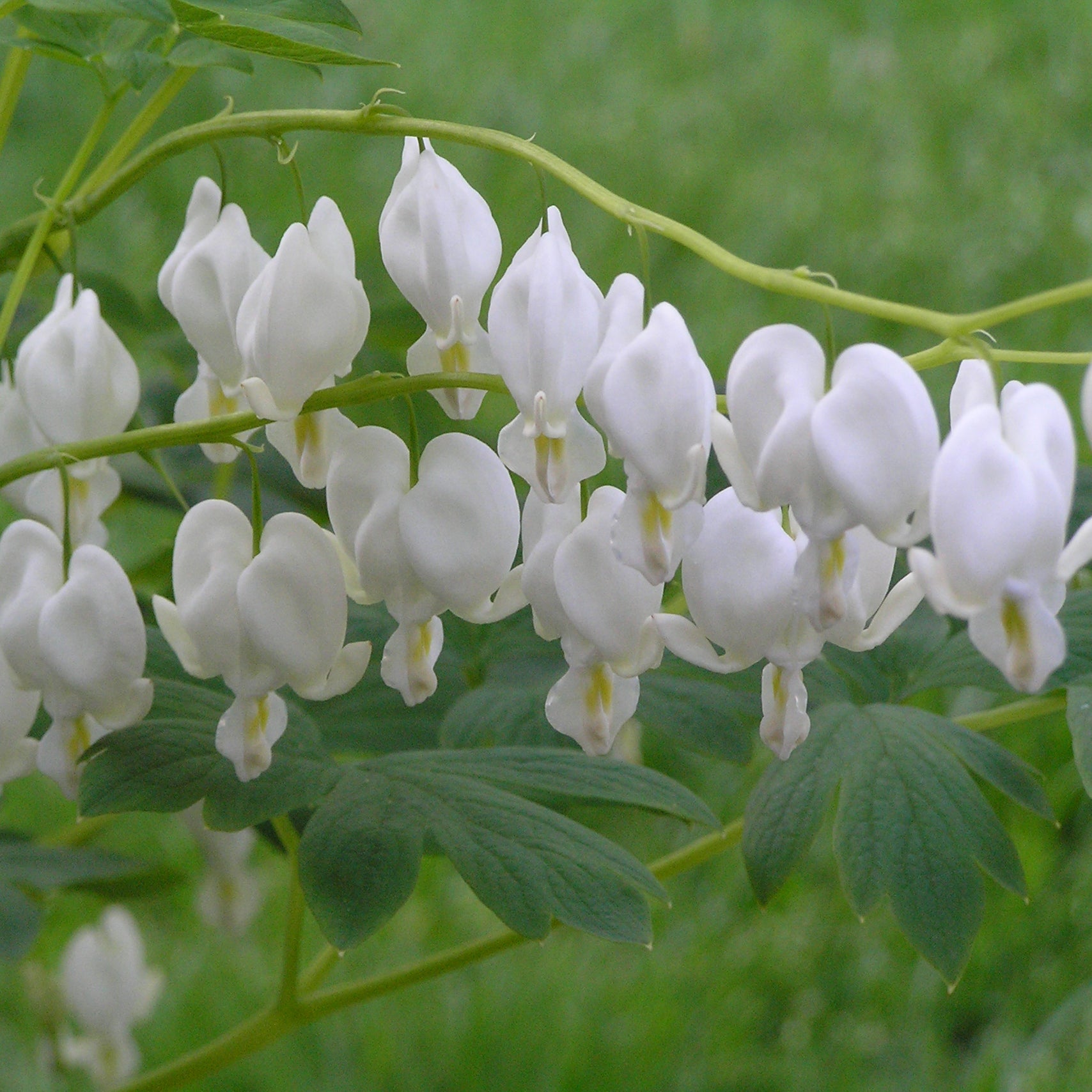
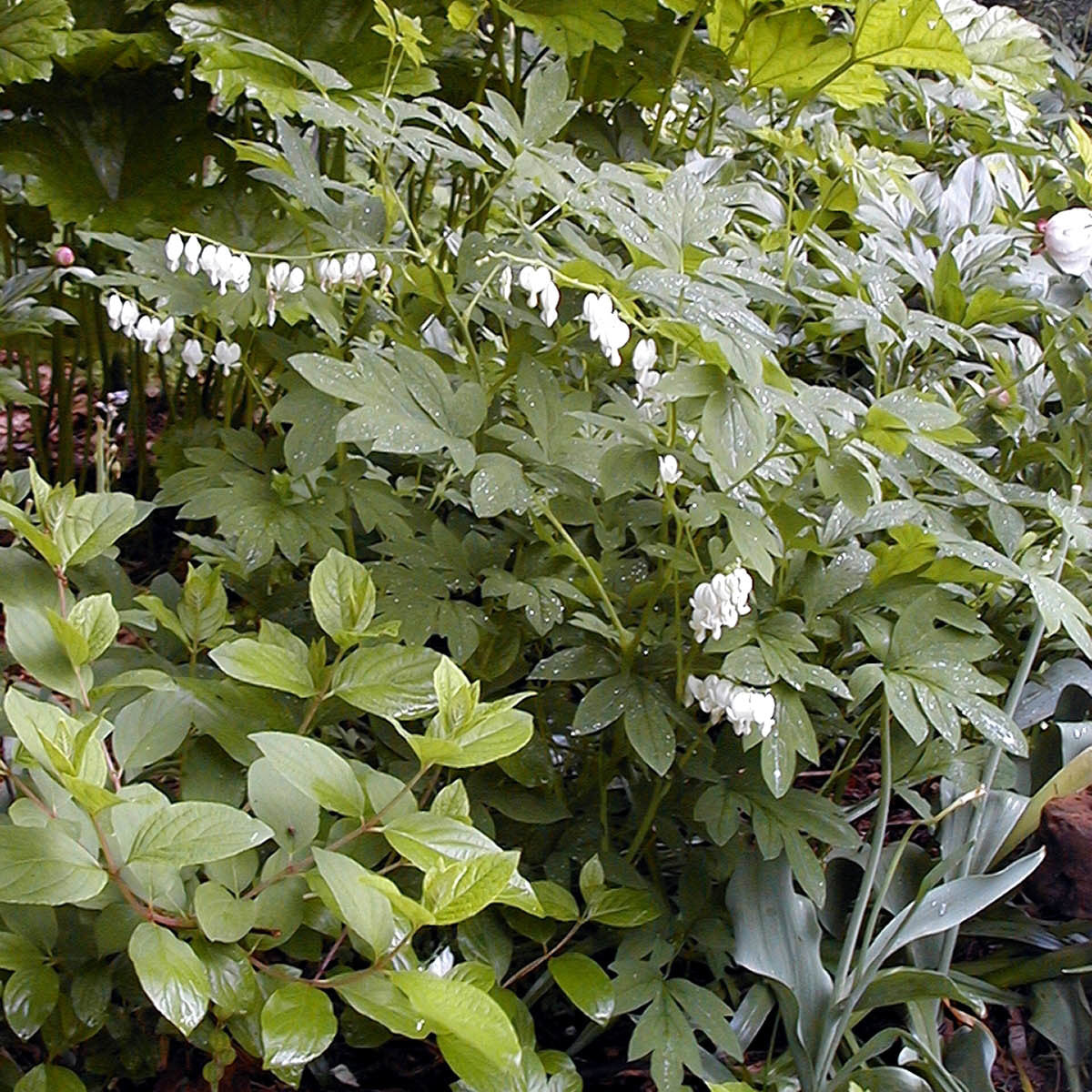
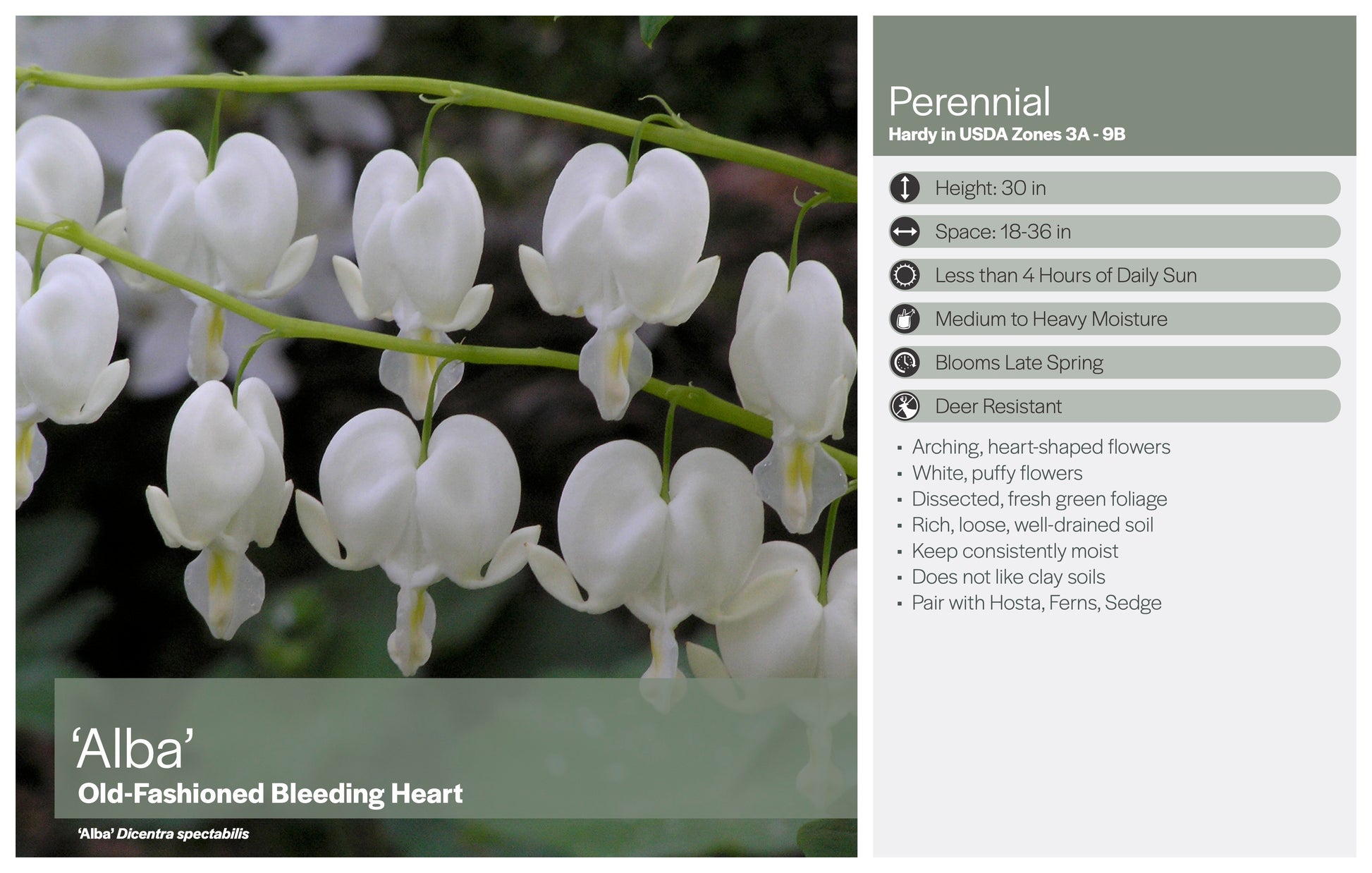
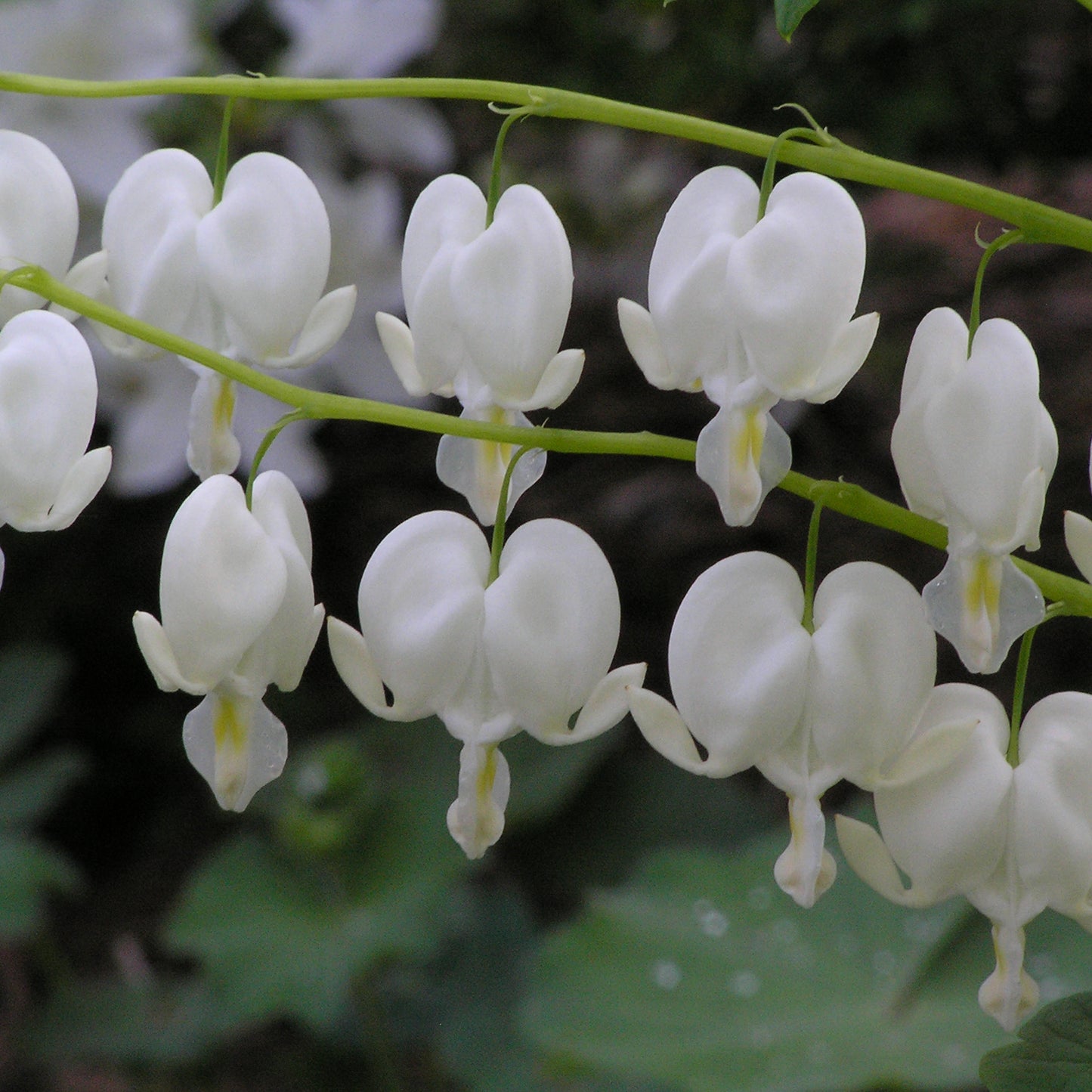
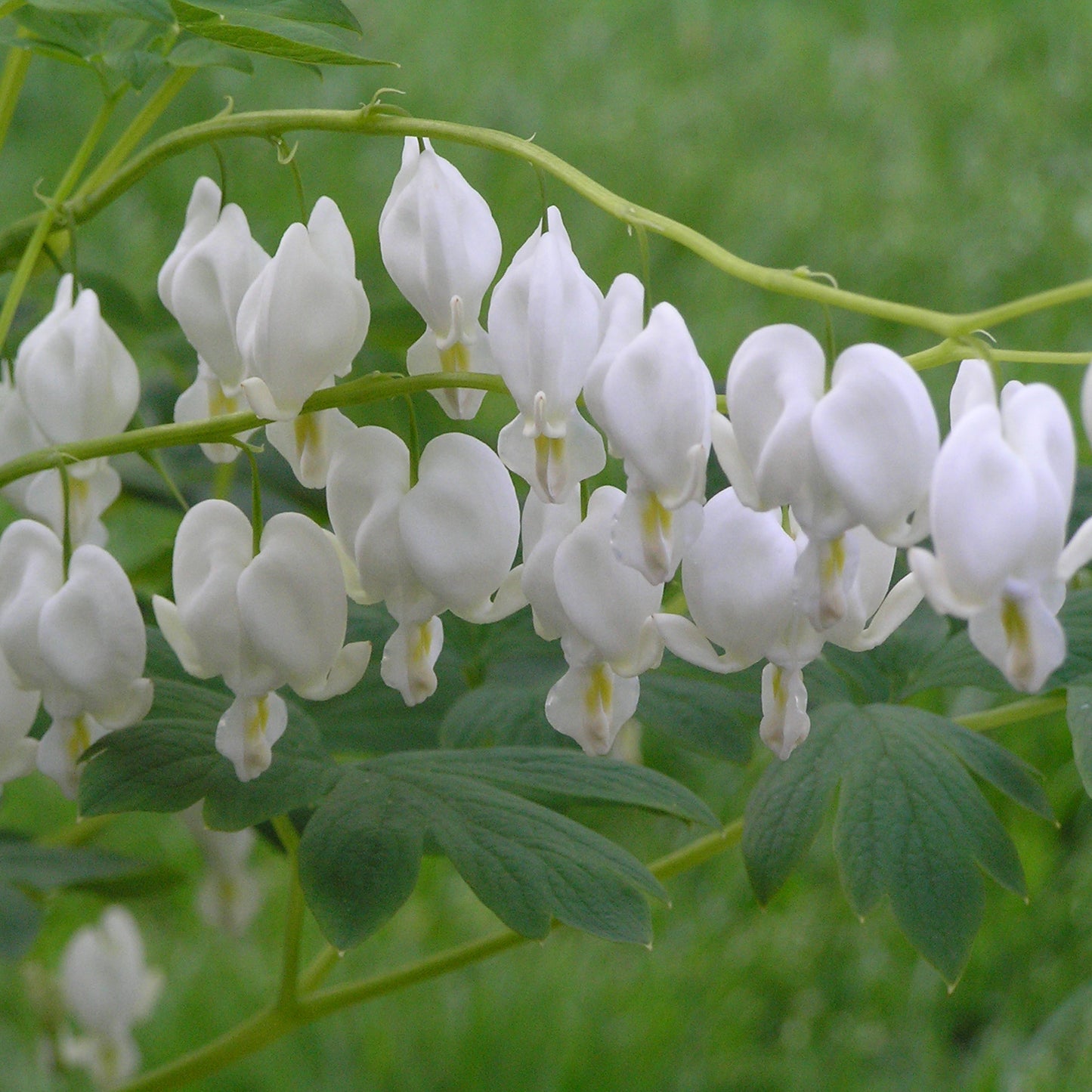
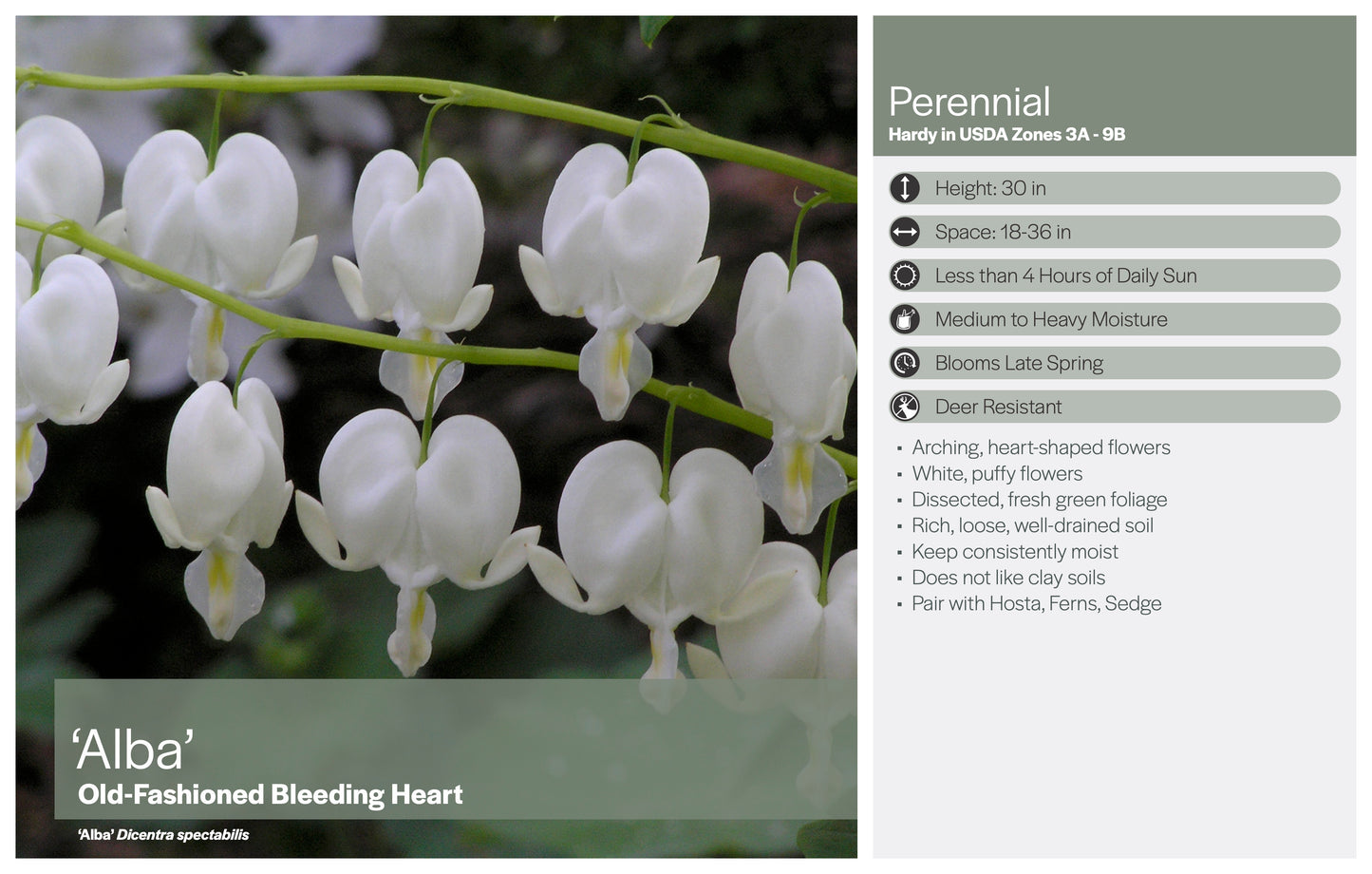
Bleeding Heart is native to both Asia and North America and gets its name from its heart-shaped flowers. In spring, the plant emerges with fern-like foliage, growing from ½ - 3 feet tall. As the season wears on, strings of heart-shaped flowers dangle on long branches, then, as temperatures climb, blooms fade and bleeding heart will die back for the season. In cooler climates, they will continue to bloom throughout the season. Will spread through rhizomes or self-seeding, though they are not considered invasive. Bleeding Heart is generally not bothered by deer or rabbits, as the plant is toxic to animals.
SITE SELECTION
- Choose a location with part to full shade. Bleeding Heart will wither with too much sun or too much heat. If there is not enough light, plants may not produce as many flowers.
- Prefers rich, well-drained soil. They prefer moisture but will rot in soil that does not drain well. Amend clay soils heavily before planting.
PLANTING
- Can be planted in fall or spring.
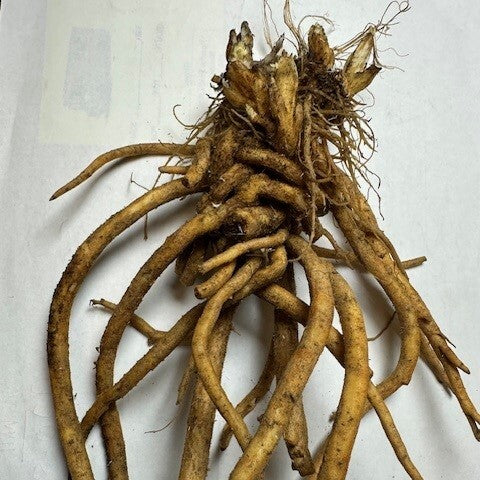
- Dig a hole twice as wide and deep as the root ball. Settle plant so that the top of the root ball is level with the soil surface.
- Apply a layer of mulch to conserve moisture, especially in hot, dry areas.
SPRING/SUMMER CARE
- Give plants a balanced, slow release fertilizer in spring.
- When the plant is done blooming, the foliage may start to yellow and die back. This is normal; the plant will go dormant in summer as temperatures climb. Cut back foliage when it becomes unsightly.
- Generally do not require division.
FALL/WINTER CARE
- No special requirements. Bleeding Heart is a relatively low-maintenance perennial.
OTHER CARE TIPS
- All parts of Bleeding Heart are toxic, so be mindful of who or what may be tempted to ingest parts of the plant, including house pets and children.
SOURCES